
Introduction
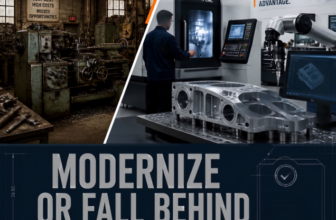
After many years in the field, I’ve seen firsthand how manufacturing has evolved and how many shops have been left behind. The truth is uncomfortable but necessary: you can’t run a modern business with outdated machines, outdated processes, and outdated thinking, and expect modern results. Yet within that hard truth lies the greatest opportunity manufacturing has seen in decades.
The Gap Technology Exposes
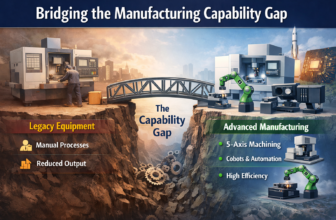
Everyone loves to talk about AI, cobots, digital twins, predictive maintenance, IoRT, and autonomous robotics. But the real story isn’t the technology itself, it’s the gap it exposes. While the industry moves toward adaptive robotics, self-learning machines, cloud-connected operations, and AI-driven decision-making, too many shops are still fighting the same battles they fought twenty years ago.
Multiple setups. Slow cycle times. Constant handling. Manual inspections. Operators stretched thin just to keep up.
And then they wonder why they can’t pay higher wages, attract younger talent, hit delivery dates, or win competitive quotes.
You can’t pay 2026 wages with 1998 efficiency. You can’t attract 2026 talent with 2005 workflows. You can’t win 2026 work with 2010 capabilities.
The Opening, Not the End
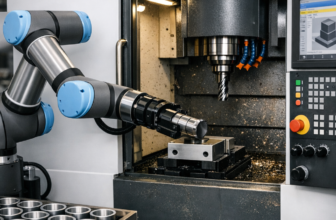
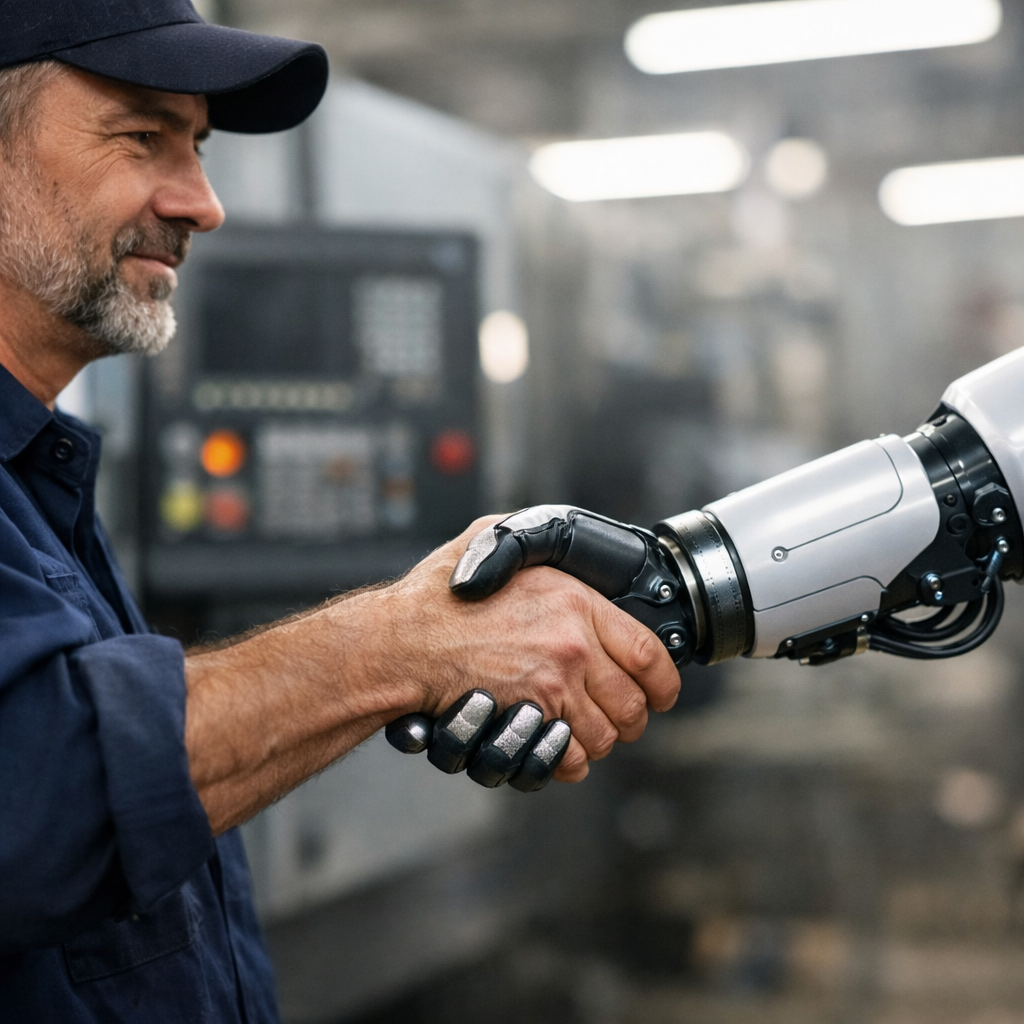
Here’s the part that matters: this isn’t a dead end; it’s an opening. Modern automation isn’t about replacing people. It’s about removing the inefficiencies that old machines force humans to absorb. It’s about giving operators better tools, not fewer opportunities. It’s about building processes that scale, instead of relying on heroics to survive.
Every shop, big or small can modernize. Every operator can upskill. Every owner can shift their mindset. Every team can evolve.
You don’t need a half‑million‑dollar machine to start. You don’t need a robotics department. You don’t need Silicon Valley money.
You just need the willingness to stop defending the past and start building the future.
The Future of Scalable Manufacturing
In 2026, the shops that thrive aren’t the ones with the most people, they’re the ones with the most scalable processes. They’re the ones who choose to evolve instead of making excuses. They’re the ones taking work from outdated shops, not losing work to them.
The gap in 2026 isn’t skill. It’s mindset, technology, and the courage to move forward.
Conclusion
The shops that choose to move forward are writing the next chapter of American manufacturing. The future belongs to those who embrace change, invest in efficiency, and empower their teams to grow alongside technology. If you’re ready to modernize your shop, start with one process, one tool, one mindset shift. The future isn’t waiting, it’s already running production.