
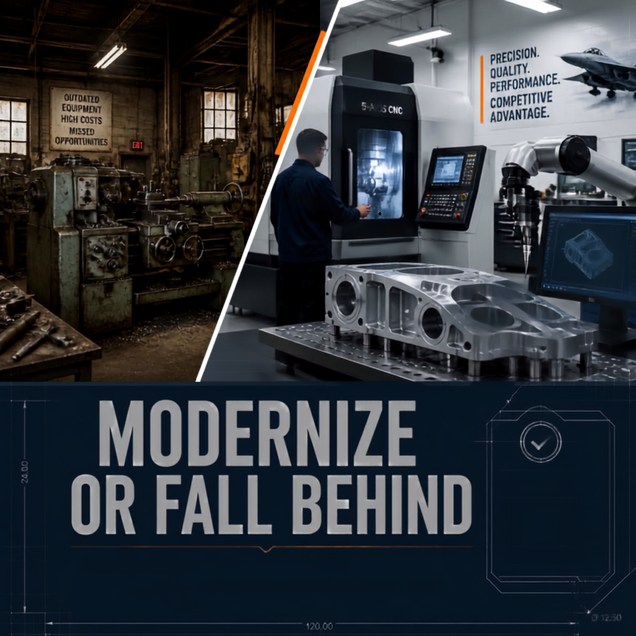
Aerospace and defense manufacturing has an uncomfortable truth that almost nobody wants to say publicly. A lot of shops aren’t struggling because of the economy or supply chain issues. They’re struggling because they refused to modernize their CNC equipment and processes for far too long. And now the industry is moving on without them.
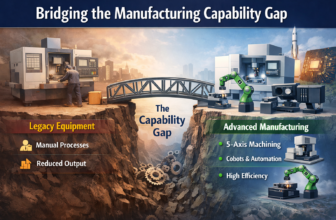
Walk into many legacy shops and you’ll still see machines from the 90s and early 2000s running critical parts. You’ll see tribal knowledge holding everything together. You’ll see operators compensating for worn-out machinery, outdated controls, and processes that depend on one or two people who are nearing retirement. Meanwhile, primes are demanding tighter tolerances, more complex geometries, digital traceability, secure data handling, and throughput that legacy equipment simply cannot deliver.
This isn’t about whether an old machine can still make a good part. It’s about whether it can meet modern aerospace requirements at scale, with repeatability, documented process control, and the speed customers expect. In too many cases, the answer is no. And shops that refuse to face that reality are losing RFQs, losing customers, and losing their place in the supply chain.
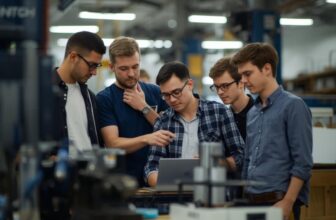
The workforce challenge makes the situation even more obvious. Younger machinists don’t want to babysit outdated equipment all day. They want modern controls, probing systems, automation, tool life management, and digital workflows. They want to grow. They want to learn. They want to be part of the future of manufacturing. When a shop refuses to modernize, it’s not just losing capability, it’s losing talent.
Here’s the part that really touches a nerve; primes and tier suppliers have already started restructuring their supplier bases. They’re quietly moving work to modern, automated, digitally integrated shops that can scale. They’re choosing suppliers who can deliver consistent quality without heroics. They’re choosing partners who invest in capability instead of nostalgia. They’re choosing shops that treat modernization as a responsibility, not an optional upgrade.
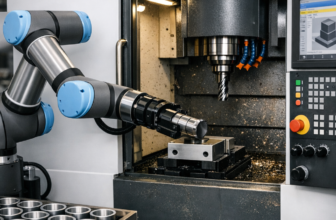
The shops that are thriving right now aren’t the ones with the longest history. They’re the ones with the strongest commitment to staying relevant. They’re investing in multi-axis capability, automation, probing, digital inspection, and secure data workflows. They’re building environments where new machinists can succeed and where customers feel confident sending critical work.
Modernization isn’t about chasing trends or buying shiny machines. It’s about survival. It’s about capability. It’s about being part of an industry that is evolving whether we like it or not. The shops that adapt will grow. The shops that don’t will fade out. And pretending otherwise doesn’t change the reality everyone in this industry can already see.